This tiny Late Roman bronze belongs to the ubiquitous FEL TEMP REPARATIO series of the mid‑4th century. Although heavily worn, the surviving bust and the characteristic diagonal lines on the reverse allow confident attribution to the Fallen Horseman type. These AE4s circulated widely and often survive in very modest condition, especially when recovered as detector finds.
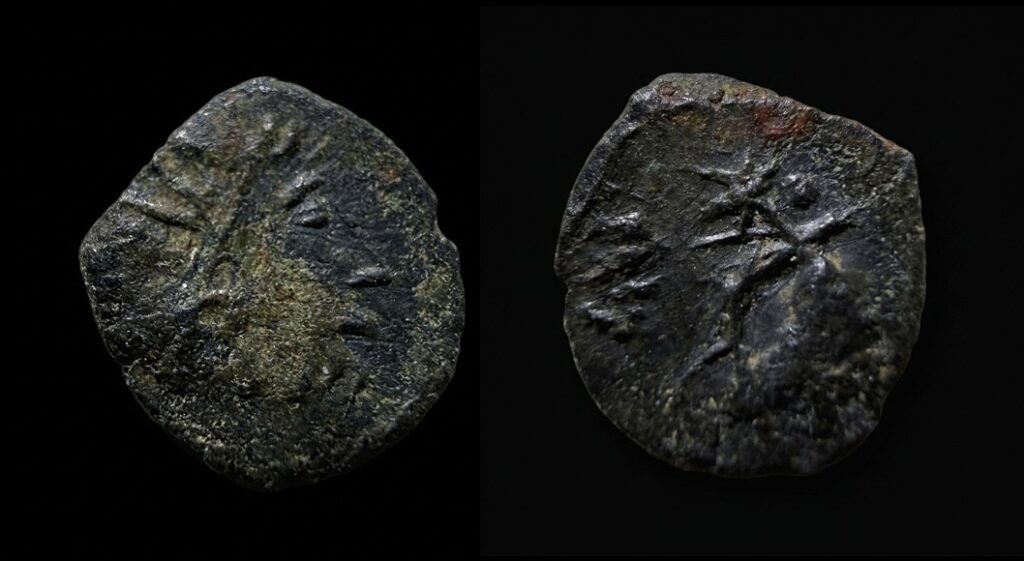
Coin Details
- Emperor: Constantius II (AD 337–361)
- Denomination: AE4 (small bronze)
- Date: c. AD 350–360
- Obverse: Diademed bust right; legend lost
- Reverse: FEL TEMP REPARATIO — soldier spearing fallen horseman (design worn)
- Mint: Uncertain (too worn to determine)
- Metal: Bronze
- Diameter: 10 × 9 mm
- Weight: 0.61 g
- Reference: RIC VIII (type only)
Historical Notes
The FEL TEMP REPARATIO series was introduced under Constantius II and Constans as part of a broad propaganda effort emphasising imperial renewal and military victory. The Fallen Horseman type — a Roman soldier spearing a collapsing enemy — became one of the most widely struck designs of the 4th century.
By the mid‑350s, the smallest bronze denomination (AE4) had shrunk to flans under 12 mm, making the designs prone to rapid wear. On many examples, including this one, the reverse scene collapses into a star‑like cluster of diagonal lines representing the spear, horse, and fallen rider. These coins circulated for decades and are frequently found in heavily worn condition.
Condition & Grading
This example shows the typical circulation wear expected of a small bronze that remained in use for many years.
- Surfaces: Dark brown patina with stable, even wear.
- Obverse: Bust visible; all legend lost.
- Reverse: Design reduced to core geometric elements; type still identifiable.
- Flan: Irregular, as struck; no active corrosion.
- Overall Grade: Fair
- US Equivalent: AG3–G4
A representative detector‑find AE4, honest and unaltered.
The Verdict
For a collection that includes Late Roman bronzes, this AE4 is a classic example of the smallest circulating denomination of the period. While modest in condition, it retains enough detail to identify the emperor and reverse type — no small feat for a coin barely 10 mm across. It also illustrates the realities of late‑imperial monetary circulation: tiny flans, heavy wear, and long service lives.
A pleasing and historically instructive addition to the Roman section.
Further Reading
- RIC VIII — The standard reference for Late Roman bronze coinage
- Portable Antiquities Scheme — Examples of AE4 Fallen Horseman types
- Numista — Constantius II AE4 entries
- Wildwinds — Constantius II FEL TEMP REPARATIO types