A tiny Roman provincial bronze, struck somewhere in the eastern Mediterranean during the 2nd or 3rd Century AD. Although heavily worn, the classical portrait style and the standing figure on the reverse clearly place it within the vast and diverse world of Greek‑imperial (provincial) coinage. Remarkably, this example was recovered by a UK detectorist — a reminder that small provincial bronzes did occasionally travel far from their original mints through trade, military movement, or later redeposition.
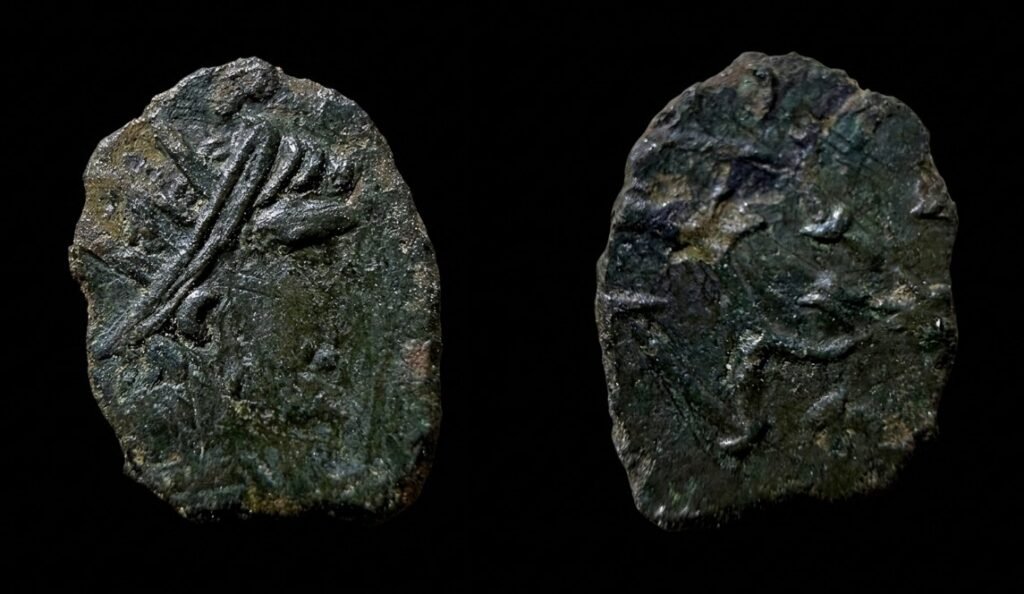
Coin Details
- Authority: Roman Provincial (Greek‑Imperial)
- Date: c. AD 150–250
- Denomination: Small bronze (uncertain denomination)
- Obverse: Laureate male head right; legend lost
- Reverse: Standing draped figure holding long sceptre or staff
- Mint: Uncertain eastern provincial city
- Metal: Bronze
- Diameter: 11 × 8.5 mm
- Weight: 0.37 g
- Reference: Not attributable to specific catalogue due to wear
Historical Notes
Roman provincial coinage was produced by hundreds of cities across the eastern Mediterranean, from Asia Minor to Syria and Thrace. These issues often featured local deities, civic personifications, or imperial portraits rendered in a distinctly Greek artistic style. The small bronzes — like this one — were everyday currency, circulating locally but occasionally travelling far afield with merchants, soldiers, or through later soil movement.
The portrait on this coin is classical in style, with a proportioned head and laurel wreath typical of emperors from Hadrian to Severus Alexander. The reverse figure, standing and holding a long sceptre, is a common motif representing deities such as Tyche, Hera, or Homonoia. Without inscriptions, the exact city cannot be determined, but the style is unmistakably provincial.
Its discovery in the UK is unusual but not unprecedented. Roman Britain saw a surprising variety of imported bronzes, and stray provincials are occasionally found in detectorist assemblages — often brought by soldiers or travellers, or redeposited in later soil layers.
Condition & Grading
This example shows heavy wear consistent with long circulation and burial.
- Surfaces: Dark brown‑green patina with stable corrosion.
- Obverse: Laureate head visible; all legend lost.
- Reverse: Standing figure identifiable by posture and sceptre; details mostly worn.
- Flan: Irregular oval shape typical of provincial issues; edges soft but stable.
- Overall Grade: Fair
- US Equivalent: AG3–G4
A heavily worn but recognisable provincial bronze.
The Verdict
Although modest in condition, this coin is a fascinating survivor from the Roman provincial world — and its presence in the UK adds an extra layer of interest. The classical portrait and standing‑figure reverse are enough to place it confidently within the 2nd–3rd Century eastern provincial tradition, even if the exact city remains unknown.
It serves as a reminder of the diversity of Roman‑period coinage and the surprising journeys these small bronzes could take. A characterful and unusual detector find.
Further Reading
- Roman Provincial Coinage Online (RPC)
- Wildwinds — Roman Provincial Coins
- Numista — Roman Provincial Bronzes
- Portable Antiquities Scheme — Roman Provincial finds in Britain